Exploring flood impacts from aboard the University of Vermont R/V Marcelle Melosira
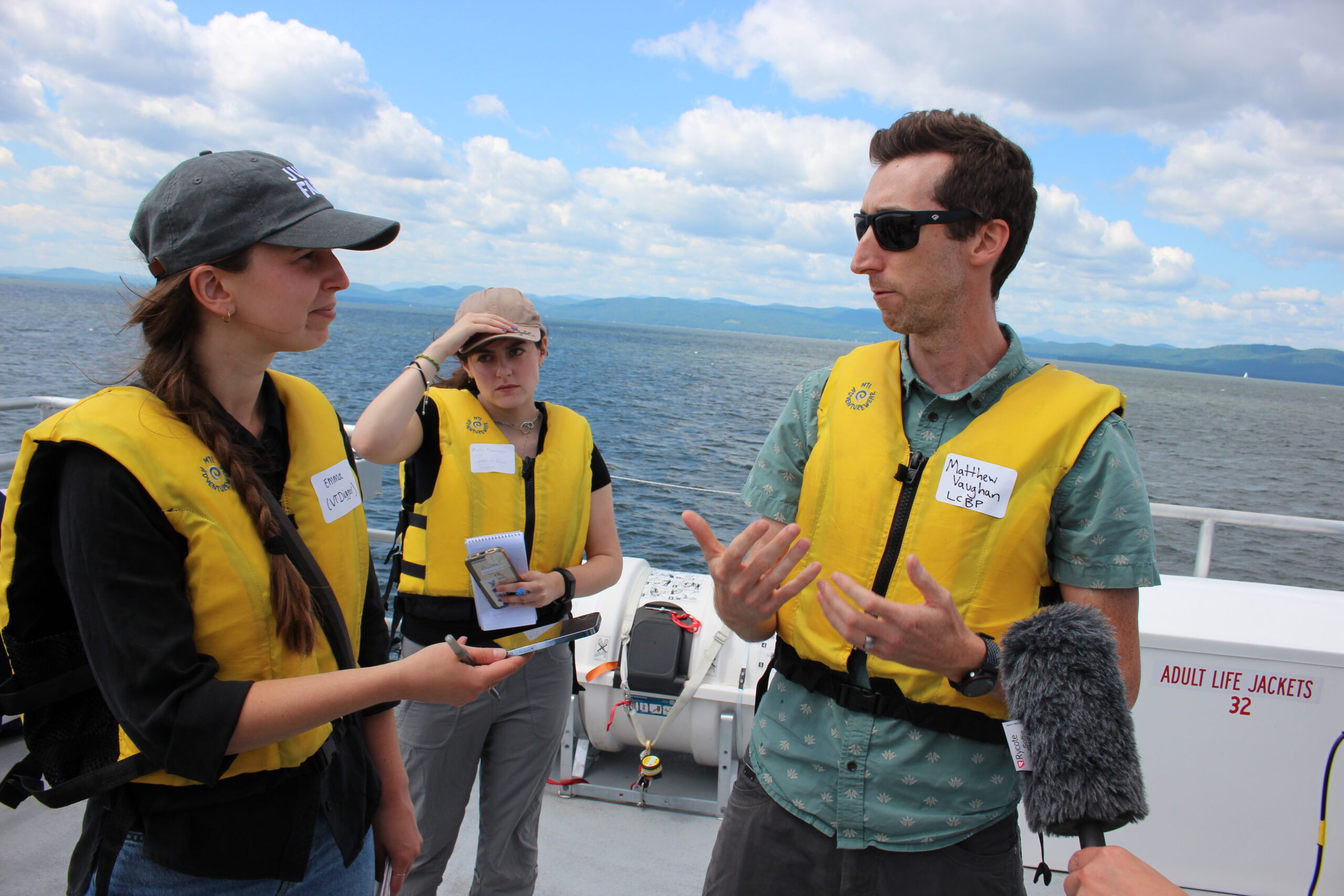
On July 18, Lake Champlain Sea Grant invited a group of radio, TV, and print media reporters aboard the University of Vermont’s new Research Vessel Marcelle Melosira to discuss the impact of recent flooding on Lake Champlain. LCBP Chief Scientist Dr. Matthew Vaughan and other experts shared preliminary findings as reporters were taken from Burlington Bay to the mouth of the Winooski River, Lake Champlain’s largest tributary, where highly turbid water was flowing into Lake Champlain. Differences in water clarity were clearly visible as the vessel approached the river, highlighting the important connection between our watershed and lake.
The recent storm caused severe damage to communities along Lake Champlain’s tributaries and delivered a large amount of sediment and debris to the lake. Because the rainfall during this year’s storm was more concentrated over a relatively smaller area, the amount of water and nutrients delivered by floodwaters in July 2024 was relatively less than during the July 2023 flood.
Sediment particles currently suspended in lake water will temporarily reduce the amount of sunlight available for phytoplankton growth (including cyanobacteria), but these nutrients may contribute to cyanobacteria blooms later this season. High E. coli counts caused short-term beach closures at Alburgh Dunes State Park and some Burlington beaches following this year’s flood, but these areas have since reopened. Reporters also spoke with University of Vermont scientists about the importance of restored floodplains and green stormwater infrastructure in building resilience to large storm events.