New research on winter nutrient loading fills important data gaps for Lake Champlain
New research supported by the Lake Champlain Basin Program (LCBP) is beginning to shed light on an important yet understudied topic: winter nutrient loading to Lake Champlain—and its implications to water quality management in the Lake.
In decades past lake scientists thought of winter as a period when soil and nutrients were largely frozen on the landscape, moving into waterbodies at a rate considered insignificant. When northeast winters saw more consistent snowpack and ice-covered rivers and streams, that assumption may have held.

But across North America, winters have been warming as a result of global climate change. In the Lake Champlain Basin, this warming has led to an increase in the frequency and duration of wintertime snowmelt, rain, and rain-on-snow events—which are bringing more phosphorus to Lake Champlain during the winter than previously thought.
And with phosphorus-driven cyanobacteria blooms impacting recreation and water quality throughout the summer and early fall months, accurately measuring and managing the nutrients entering Lake Champlain is a top priority for the LCBP and partners across the Basin.
In 2020 the LCBP awarded funding to a research group at the University of Vermont, led by Dr. Carol Adair, to investigate the consequences of warming winters on nutrient loading to Lake Champlain. Additional members of the research group include Sonya Vogel, current Assistant Scientist with the LCBP, Dr. Andrew Schroth of the University of Vermont Water Resources Institute, Dr. Megan Duffy, post-doctoral research fellow at the Rubenstein School of Environment and Natural Resources, Dr. Meghan Taylor, post-doctoral fellow from 2021 to 2023, and UVM lab-technicians Saul Blocher and Satish Serchan.
Preliminary data released by the research team indicates that 15 to 55 percent of the total phosphorus entering Lake Champlain in a year is delivered during the winter months. The finding exceeds the estimates used to develop models that predict—and help manage—annual nutrient loading.
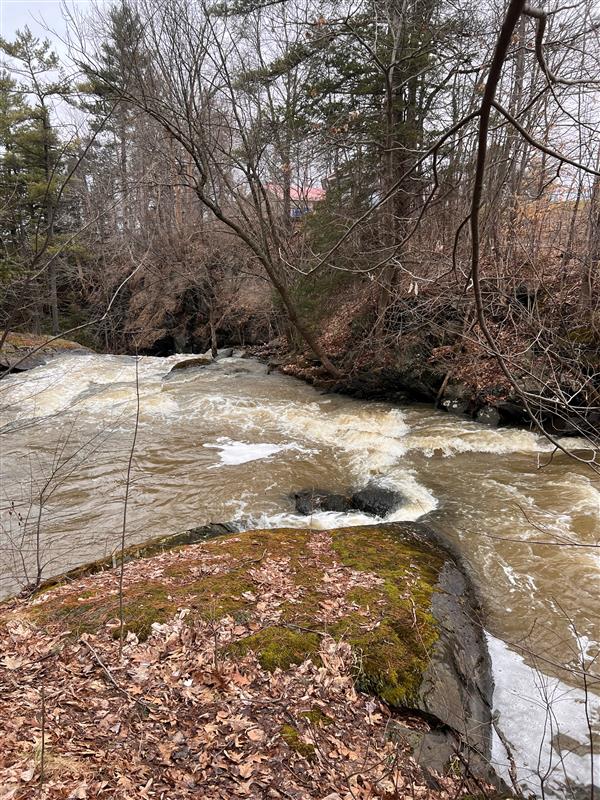
Prior to beginning the formal research effort, Dr. Adair and colleagues had already observed at several monitoring sites that winter thaws and rain events were leading to fast-flowing rivers and silty, brown water. In other words, they knew that sediments and nutrients were headed downstream into Lake Champlain throughout the winter, but they did not know the degree of loading or where nutrients were coming from.
Water quality researchers tend to avoid sampling in the winter for a reason—it’s incredibly difficult. But to dig into the question of winter loading, the research team had to winterize their existing sensor networks in two tributaries to the Missisquoi River. That’s no small feat when high winter flows and moving ice can damage costly sensors, tubing on samplers freezes frequently, and the solar panels that power sensors are at times covered in snow and unable to provide sufficient power.
Moreover, any issues compromising the sensors functionality require maintenance work in the middle of Vermont winter, which might include breaking through ice to access sensors and defrosting machinery, all while taking winter safety precautions.
And finally, while the team has not yet lost a sensor to increasingly high flows, the sensors have been pulled downstream, struck against culverts, and buried in sediment, affecting their functionality and disrupting data collection.
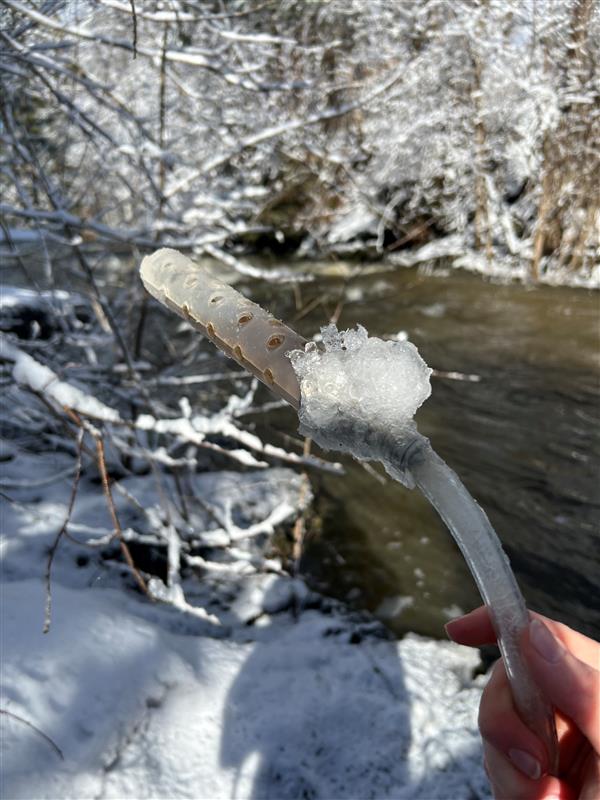
Drawing on wisdom gleaned from similar studies around the country, the team succeeded in preparing the monitoring system to face the winter months. Now, these winterized sensors are able to collect high-frequency water quality data year-round. To supplement data collected over the last two winters, five additional stream sites on the Vermont side of the Lake Champlain Basin were monitored during high-flow events using automated water samplers.
Quantifying phosphorus—coming up with the range of 15 to 55 percent of annual loading—turned out to be simpler than answering the question of where phosphorus is coming from in the winter and how it gets into rivers and streams.
Statistical analysis on a large number of samples taken at sites around the watershed suggest that winter phosphorus sources vary by site and event. Increased stream flows during the winter access previously undisturbed phosphorus pools and also bring phosphorus which previously was exported during spring melt into tributaries earlier in the year.
The high level of variability observed occurs in what are called the “pre-event conditions” (whether the soil is frozen and the degree of snowpack), as well as the “event characteristics” (the duration and intensity of precipitation, and degree of snowmelt that occurs). Subtle differences in the conditions and characteristics associated with snowmelt and precipitation can change the ways in which nutrients move off the landscape and into waterways.
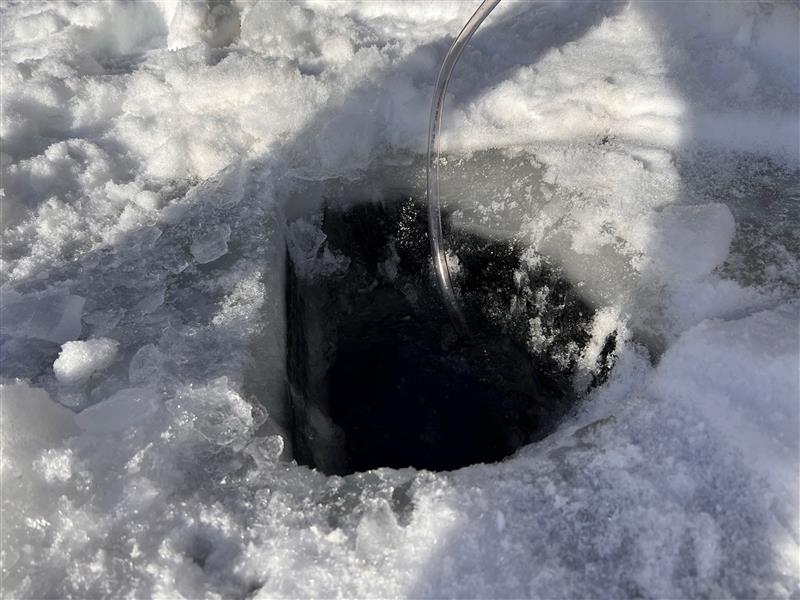
Now going into a third winter of data collection, this research is filling a major knowledge gap that that has challenged scientists and resource managers for years. With more data and increased awareness of the importance of winter nutrient dynamics, scientists will no longer need to rely on assumptions when informing management decisions.
Since 2002, phosphorus management in Lake Champlain has been driven by the Total Maximum Daily Load (TMDL). The TMDL establishes limits for the amount of phosphorus that Lake Champlain can receive over the course of a year and remain healthy. However, the limits currently set for Lake Champlain were established using data gathered only in the summer months.
Management efforts that reduce phosphorus entering Lake Champlain will continue to be crucial to protecting the health of the lake, its ecosystems, and the communities that rely on it—especially as a changing climate brings added pressures to our region.
References: Sonya Vogel, LCBP Assistant Scientist; Dr. Carol Adair via Lake Champlain Sea Grant Research Webinar: Consequences of Warming Winters on Nutrient Export to Lake Champlain