Q: What happens to wetlands in winter?
A: World Wetlands Day falls at the beginning of February each year—perhaps an unusual time to pay extra consideration to wetlands, but one that invites the question of how wetlands function in winter. While wetlands, like much of the landscape, may appear dormant during the winter months, they in fact continue to support a diverse array of species and provide important services that benefit water quality year-round.
What is a Wetland?
But first, what is a wetland? Wetlands are transitional areas lying between dry lands and waterbodies. Bogs, swamps, marshes, and fens are all different kinds of wetlands. Some wetlands have standing water all year round, and others for only part of the year. They typically feature unique soil types and are home to plant and animal species that tolerate fluctuations in the aquatic environment. Their size ranges a few hundred square feet to thousands of acres.
The Lake Champlain Basin has more than 300,000 acres of wetlands. These important areas act as large, natural filters for sediment, pollutants, and nutrients. When it rains, wetlands can capture water before it enters streams and rivers. Dense wetland vegetation helps slow water, allowing plants to absorb nutrients and letting moving sediment particles settle to the bottom. Wetlands tend to release stored water slowly, which can replenish local groundwater levels during dry periods and sends cleaner water downstream.
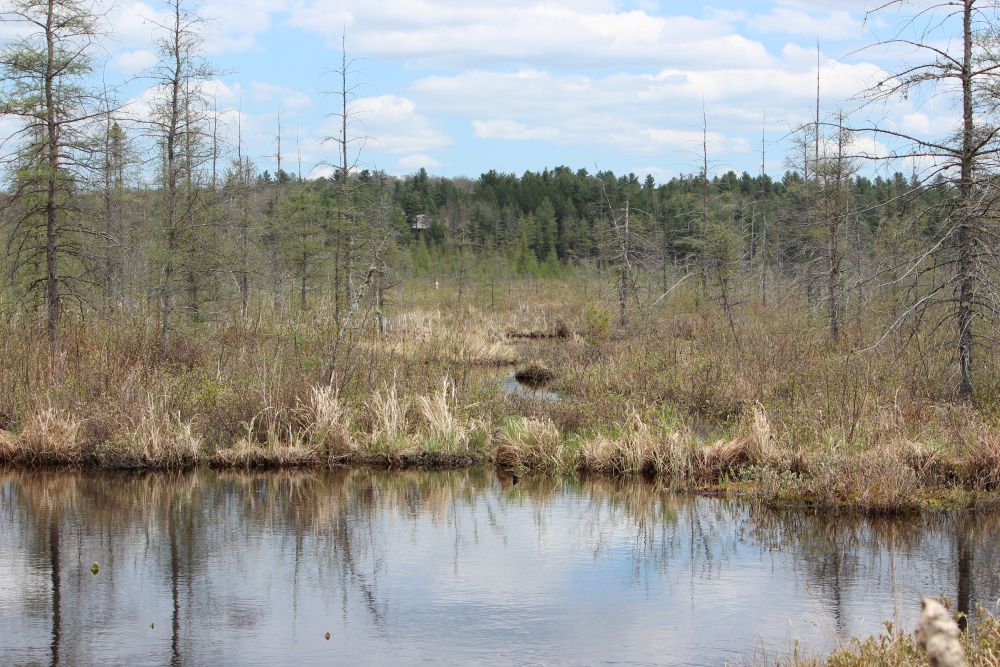
The wetlands of the Lake Champlain Basin are hotspots for biological diversity. Falling within the Atlantic flyway, wetlands give waterfowl and migrating birds the chance to rest and feed during their fall and spring migrations. Shallow waters are home to many species of aquatic plants, fish, turtles, frogs, salamanders, and mammals. Some species can only survive in wetlands, making wetlands their “primary habitat.” In the Northeast, those species include the Canada goose, wood duck, great blue heron, muskrat, beaver, snapping turtle, and bullfrog.
Wetlands are also characterized by very high rates of plant productivity, or the conversion of sunlight into organic matter. High levels of productivity combined with the ability to trap sediment means that wetlands tend to capture and store significant amounts of carbon.
Wetlands in Winter

So, wetlands have a lot going on. Is that true in winter, too? Though to a lesser extent than during the other seasons, the answer is yes.
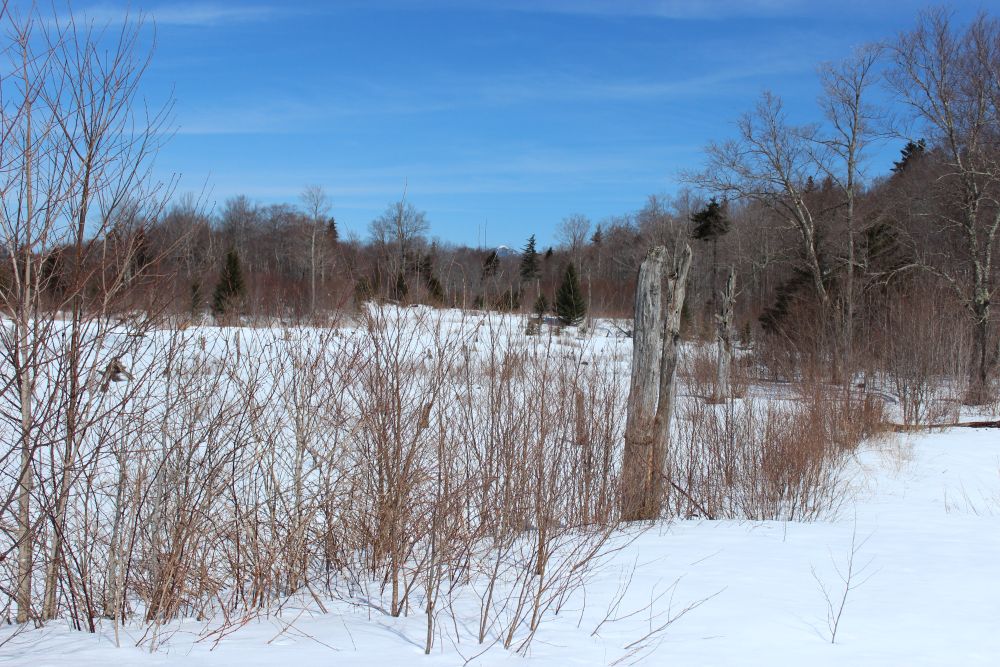
During the winter, the shallow water of a wetland will typically freeze over, but cattail stalks and other identifying vegetation can still be seen poking up through the ice.
Below the ice, frogs and turtles will bury themselves in the muddy bottom, letting their heart rates and breathing slow while they wait out the long winter in a dormant state. Fish tend to move to deeper waters but will continue to swim (albeit slowly) throughout the winter. For energy, they rely on stored fat from the summer and small meals of drifting insects and zooplankton.
Several kinds of mammals will travel through wetlands during the winter, too. Otters eat slow-moving fish, while beavers seek out bark, twigs, and buds of trees and shrubs. Muskrats tend to scavenge for aquatic vegetation, especially tubers. Coyotes and foxes move quietly across the landscape.
And while the migratory birds will have come and gone by winter, one can still visit a wetland on a cold winter day and see the familiar American robin, northern cardinal, several kinds of ducks, and other species who stay put all winter long.
Protecting and Restoring Wetlands
Indigenous people of the Northeast have long related to wetlands as sources of sustenance, material, and medicinal resources.
European settlers, on the other hand, quickly found that wetlands could not serve as farmland or land on which to build. The perception of wetlands as essentially “useless” areas has largely persisted up through the present: wetlands across the United States face pressures from agriculture and development, and despite federal, state and local regulations protecting them, wetlands still may be drained or filled for agricultural, residential or commercial purposes. As much as 50 percent of the Basin’s wetland areas have been lost to development and draining since colonial settlement.
Recent decades have seen a rising awareness around the value of wetlands, backed by a substantial body of scientific research demonstrating the countless services wetlands provide to human and other ecological communities. Significant efforts have been made to restore historic wetlands and protect existing wetland areas in perpetuity, through both regulatory measures and non-regulatory actions, often conducted in collaboration with private landowners.
In the Lake Champlain Basin, wetlands are vital habitat for countless species, especially in the midst of environmental change. And as our communities contend with more frequent flooding and the water quality impacts of stronger storm events, wetlands can work as natural sponges that take up excess water and nutrients, protecting Lake Champlain and the smaller lakes and ponds we love.
Chances are that wherever you live, you’re not too far from a wetland. Take a visit in the winter, or any other season, and spend some time looking and listening. You might be surprised by how much you see.
References: Lake Champlain Basin Program Fact Sheet Series, Lake Champlain Basin Program Atlas, Environmental Protection Agency, Audubon Community Nature Center, Scenic Hudson, Chesapeake Bay Program, Vermont Department of Environmental Conservation