Ausable Chasm
Our seventh Place in the Basin entry brings us into the heart of one of the most popular sightseeing destinations in the Adirondacks: Ausable Chasm.
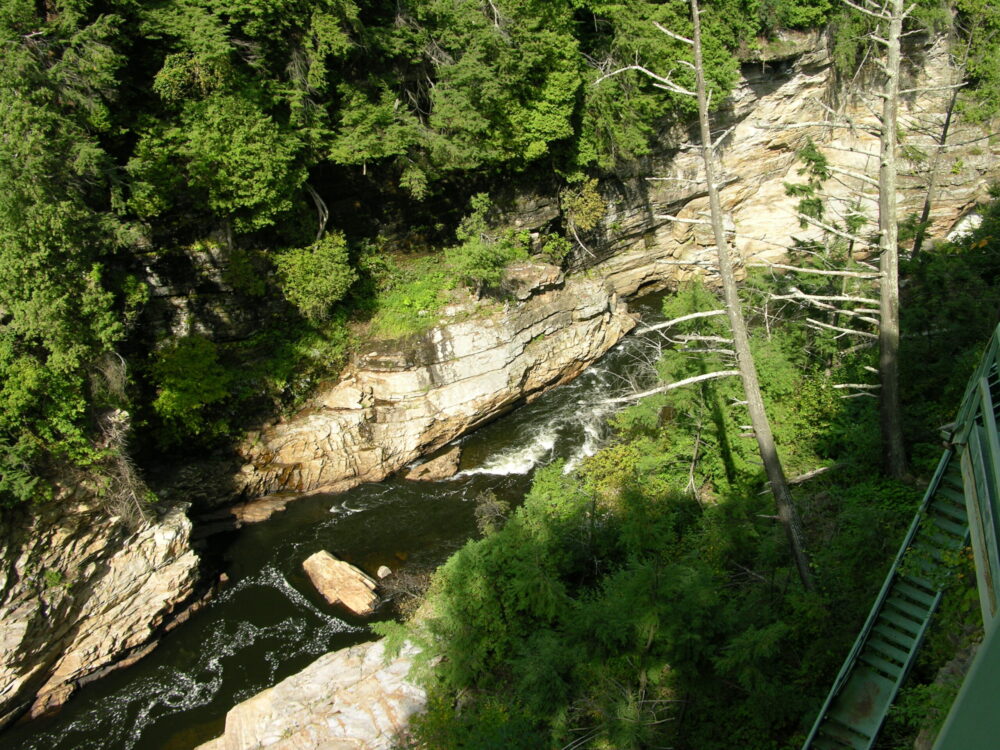
Ausable Chasm is a gorge on the Ausable River, located near Keeseville, New York. The gorge runs for about two miles, with a staggering depth of about 150 feet. After passing through the gorge, the Ausable River runs for one more mile before it reaches Lake Champlain.
Ausable Chasm presents a unique opportunity to explore the geologic history of the Lake Champlain Basin. The gorge is carved out of Cambrian Potsdam Sandstone. The 520-foot-thick exposure is 500 million years old, and formed from ancient tidal flats—coastal environments where shallow seas and land met. Fossils and ripple marks from ancient sea floor can be seen in the sandstone today.
Formation of the chasm began following the glacial period that covered the Champlain Valley in glacial till, and during which melting ice sheets formed the Champlain Sea. As the sea began to recede, about 10,000 years ago, a much larger and stronger Ausable River than the one we know today began cutting its way through layers of glacial till. The original Rainbow Falls formed, but headward erosion caused the falls to recede upstream. Meanwhile, the powerful river pushed through fractures in the sandstone, carving a deep and angular path through the otherwise erosion-resistant sandstone.